Written responses
Bio
Dancing around themes of death and futility, my practice explores the intersections of collage, painting, ceramics, and animation. My iterative process layers personal photographs, developmental diagrams and a found imagery database to create works shaped by personal narratives of anxiety and mental health.
Using art-making to think through difficult topics and uncomfortable emotions, recent work considers the trap of using avoidance to comfort oneself when confronted with death. This work explores manifestations of anxiety that drive a futile desire for control in the face of mortality.
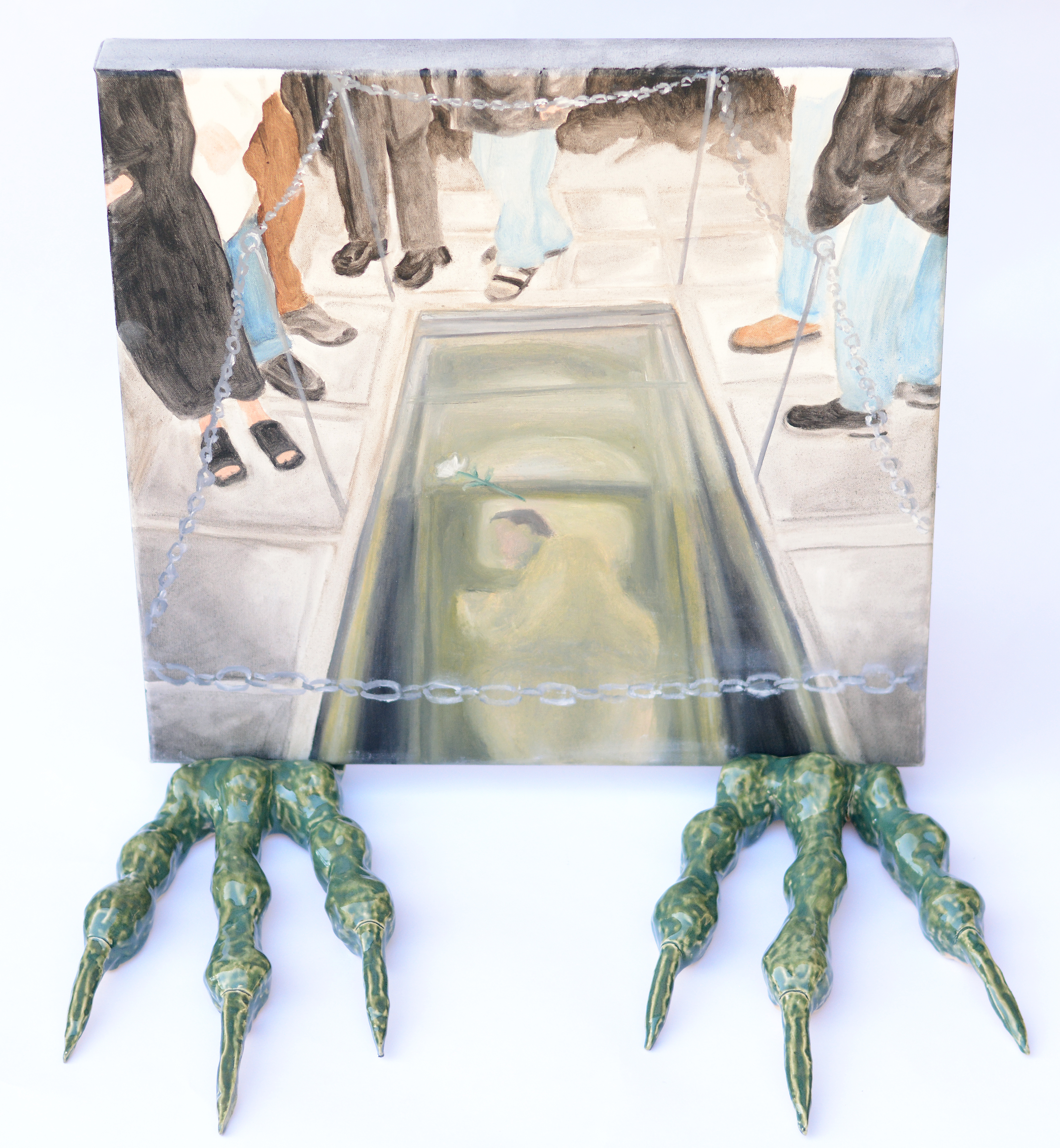
Using humour and absurdism to explore incongruous reactions to uncertainty, through medieval-inspired ceramics, nonsense diagrams, fragmented paintings and slapstick animations, my works encourage viewers to find humour in the inevitable.
Creative Practice
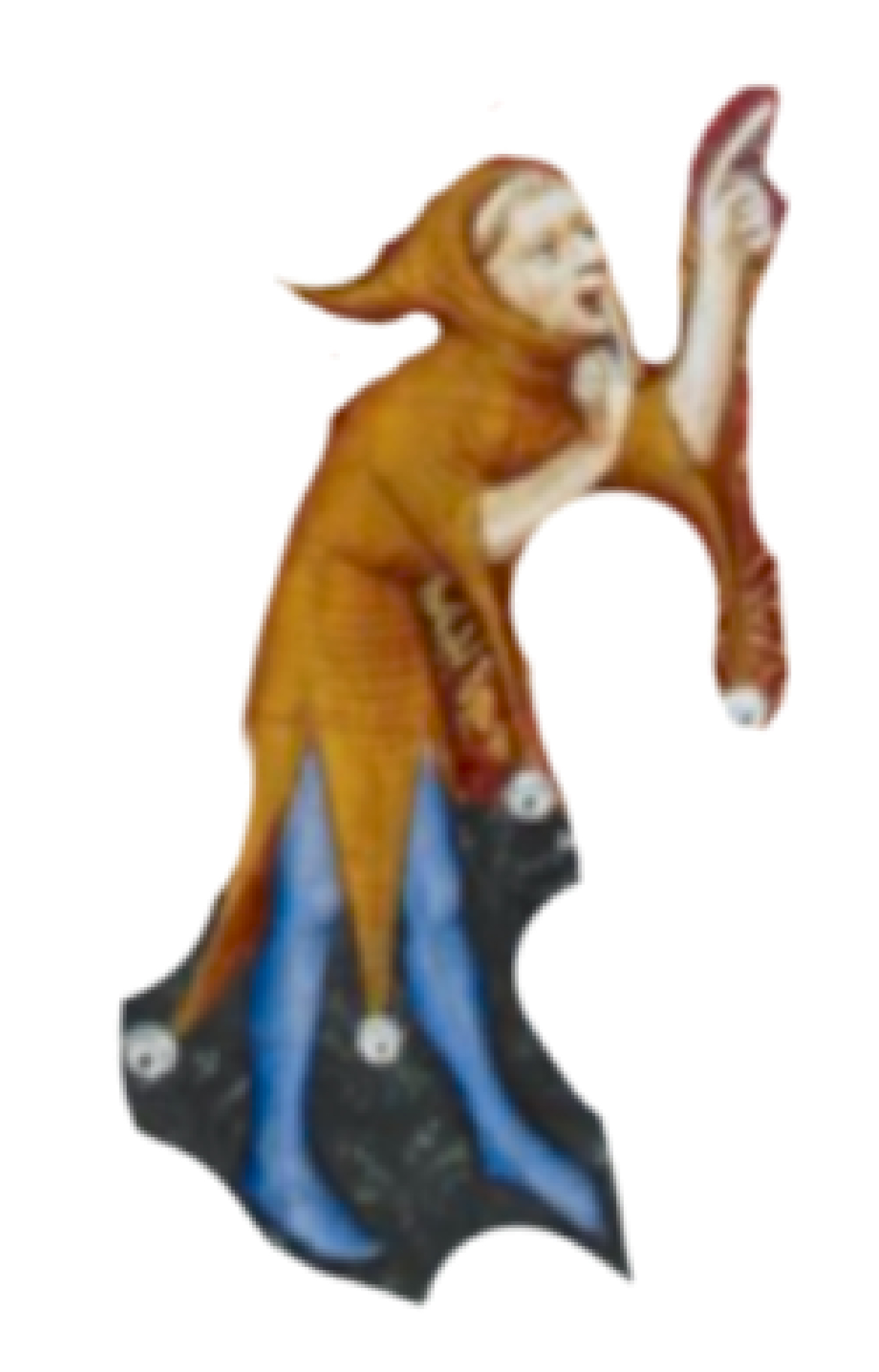
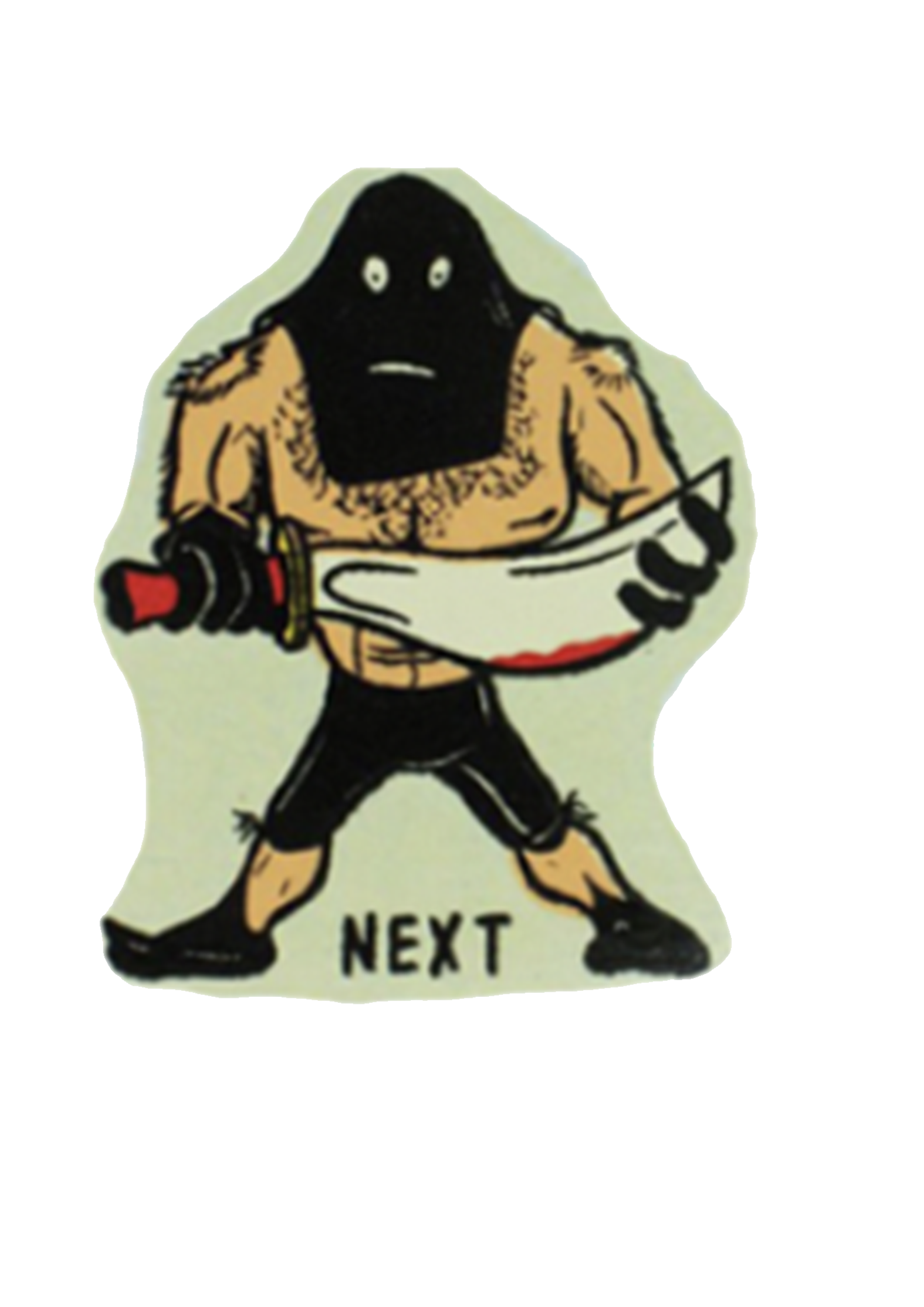
Inspired by the medieval fool archetype, my animations depict helpless cartoon figures being ridiculously deconstructed. Stuck in a continuous loop, these characters are trapped in an emotional spiral, reflective of the self-perpetuating cycle of anxiety or the repetition of an obsession. Each frame is hand-painted, exaggerating the plasticity and extremes of cartoon visual language through the liquidity of oil paint on glass. Each figure’s messy demise unfolds with visceral textures and absurd narratives, drawing upon slapstick comedy.
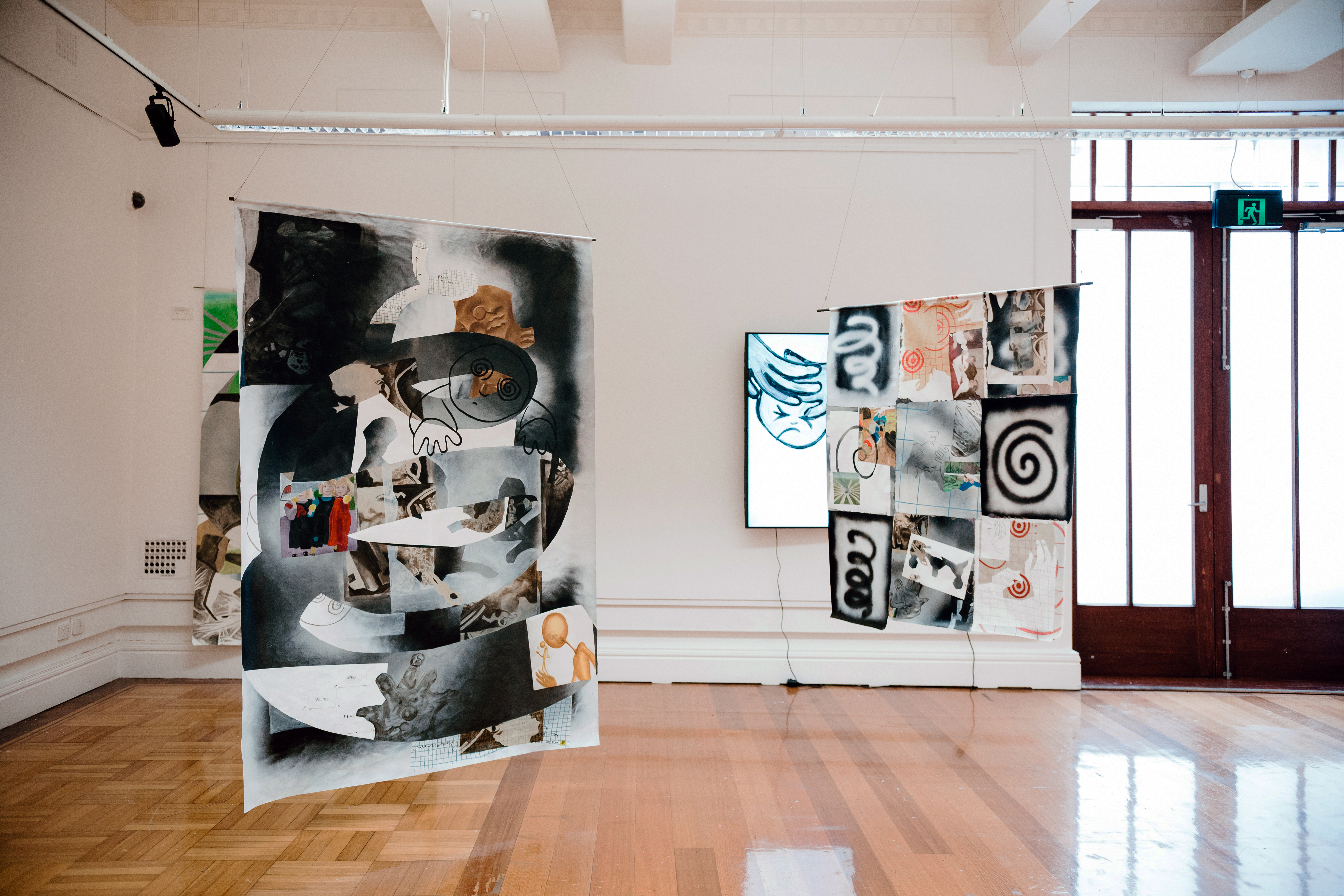
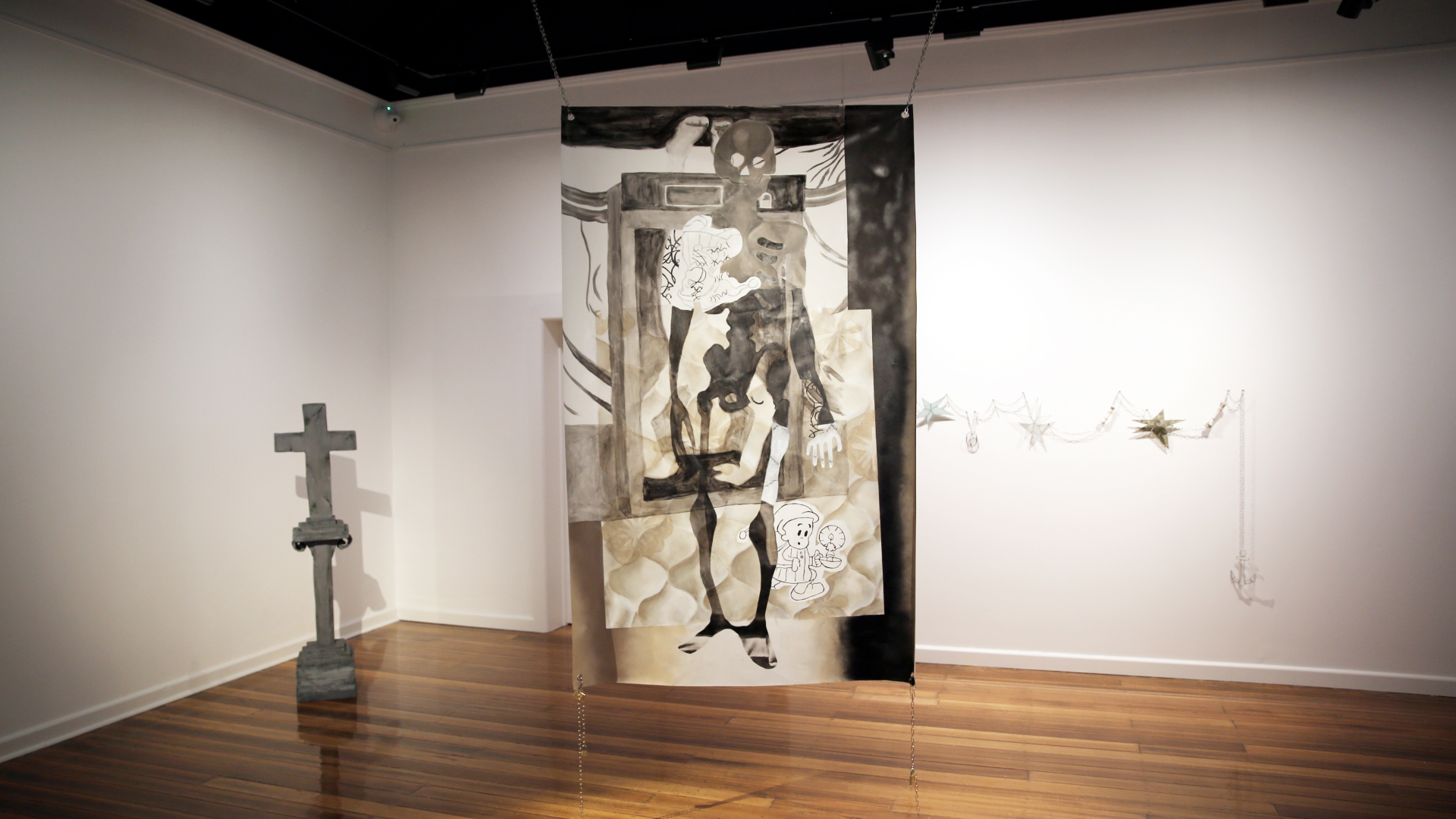
Using oil, acrylic and spray paint, imagery is translated into fractured compositions that enhance the qualities of the original reference. Drawing from a collage assembled both digitally and by hand, this painting weaves together a network of visual sources, from cartoons to found photographs. Overexposed photos, flat graphics, and tactile textures are each granted a distinct visual language, translating the physical layering of disparate elements into a single flat surface.
My recent work has investigated escapology and the futile comfort of avoidance when confronted with death. Through a 19th-century obsession with magic tricks and death-defying feats, paintings such as ‘Deathbed’ highlight a desire for control in the face of mortality.
I have also begun development for two animations, ‘Shadow of a Doubt’ and ‘Disappearing Act,’ which both respond to themes of performance and self-fulfilling anxiety.
What ideas, questions or directions would you like to explore through Kickstart?
My most recent large-scale oil and spray painting, ‘Blind Spot,’ investigates this phenomenon both as a physiological disruption to the visual field and as a cognitive pattern shaped by denial or ignorance or selective awareness. Building on this work, I plan to continue exploring related perceptual experiences, such as migraines, afterimages and visual static, as a framework for understanding distorted modes of perception.
As someone who experiences chronic migraines, I am interested in exploring how individual symptoms might be translated into visual form to communicate the function of seemingly counterproductive reactions to uncomfortable subject matter. This direction extends an ongoing examination of incongruous coping behaviours, reframed as adaptive responses. Psychological coping and physiological perceptual disruption are positioned as parallel systems that filter and mediate overwhelming sensory and conceptual input.
I would love to apply my collaging methodology to explore different ways of combining ceramics, painting and even animation. Through an iterative series of material experimentation, I propose to Frankenstein these mediums together to explore how they can overlap and intersect in new ways.
Why is this the right time for you to undertake a program like Kickstart?
I am currently at a point in my practice where I have developed foundational skills in stop-motion and ceramics, and I am excited to extend both my technical abilities and conceptual approach to these mediums. As I am predominantly self-taught in these areas, I see Kickstart as an opportunity to consolidate and build on existing knowledge by structuring a new phase of learning and experimentation.
The Kickstart program would allow me to build on my current momentum and develop my skillset to create more complex and ambitious work, while also refining the relationship between these mediums and my broader practice.
In animation, this could involve experimenting with camera angles, incorporating additional mediums, and working with more glass panes for increased layers and depth. In ceramics, I am particularly interested in developing the technical knowledge required to hand-build larger, more intricate sculptural forms, as well as undertaking dedicated exploration of texture and glazing.
What would be your ideal outcome at the culmination of this program?
My ideal outcome at the culmination of this program would be the development and production of a new animation that effectively incorporates a range of new techniques and approaches. I would also aim to produce an iterative series of experimental works that explore different material relationships between ceramics, stop-motion animation, and painting, to investigate how these mediums can interact and inform one another.
Alongside the development of new work, I hope to expand my technical understanding of both ceramics and animation through structured learning and extensive experimentation. A key outcome for me is also professional development through mentorship, peer-to-peer exchange, and networking opportunities within a creative community. Overall, I see Kickstart as an important opportunity to move through a cycle of expansion, experimentation, and refinement, consolidating my practice through the production of a more cohesive and resolved body of work.
CV
CV_Emma Lyn WinklerSupport Material
What Remains
Sleight of Hand
![Blind Spot (2026) oil and spray paint on canvas, 210 x 129 cm]()
![]()